
All About Blood
Blood is made up of four main components — red blood cells, white blood cells, plasma, and platelets — each playing a vital role in keeping us healthy.
Red Blood Cells
These cells carry oxygen throughout the body using haemoglobin. They also transport carbon dioxide back to the lungs and keep organs functioning.
White Blood Cells
These are key players in the immune system, helping the body fight infections. Most white blood cells are removed from transfused blood, as they do not assist the recipient.
Plasma
Plasma makes up about half of whole blood and carries important proteins that help with clotting, carry antibodies that fight infection, and maintain blood volume.
Platelets
Platelets form plugs at sites of injury, helping the body stop bleeding.
What happens after I donate?
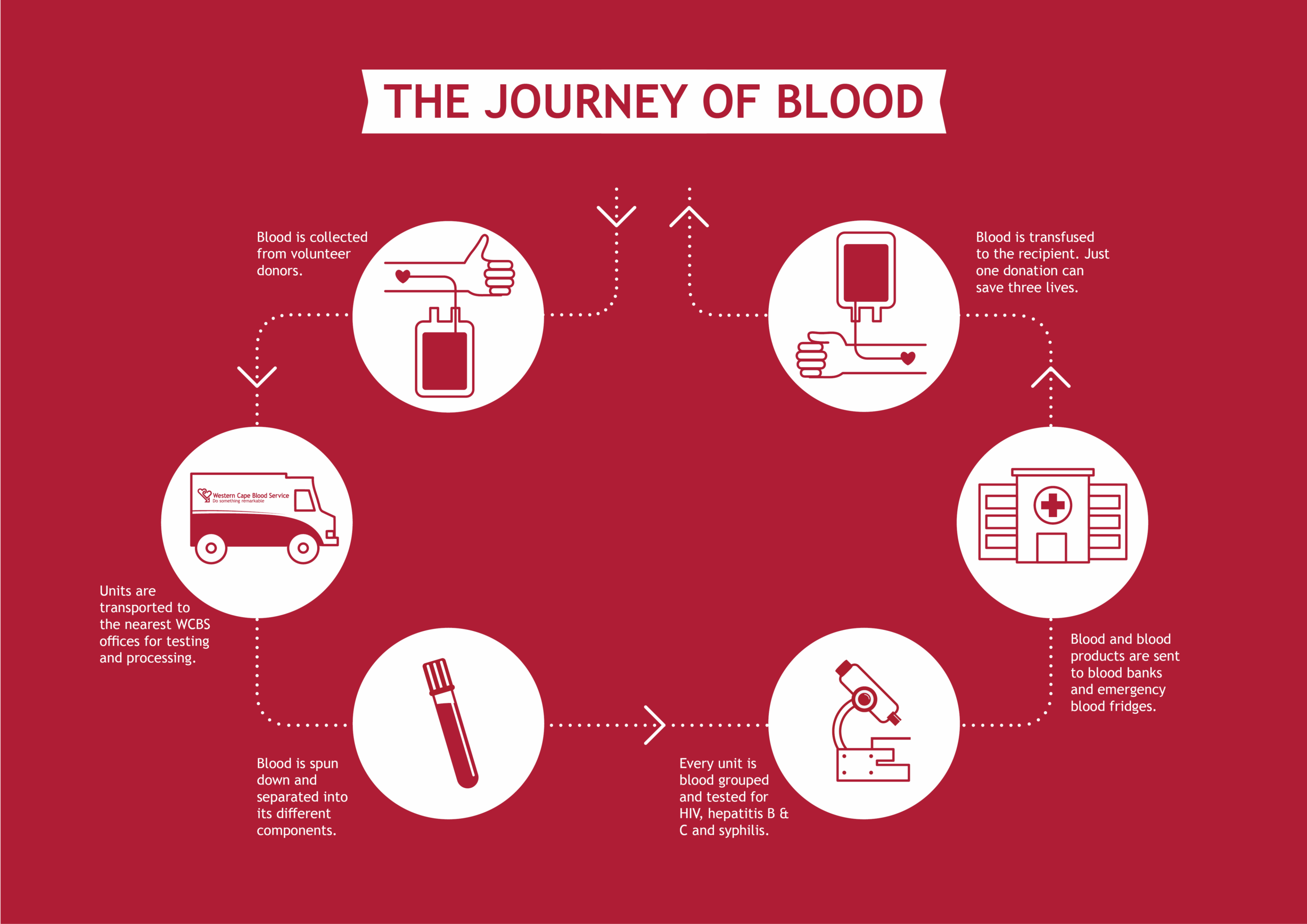
Your donation is separated into components so that several patients can benefit from one unit of blood. One whole blood donation can save up to three lives.
Blood groups
There are four blood groups — A, B, AB, and O — determined by proteins on red cells. Group A has A proteins on red cells, Group B has B proteins, Group AB has both, and Group O has neither.
You are “positive” or “negative” based on the presence of the RhD protein.
Group O is the most common blood group, followed by A, B and AB.
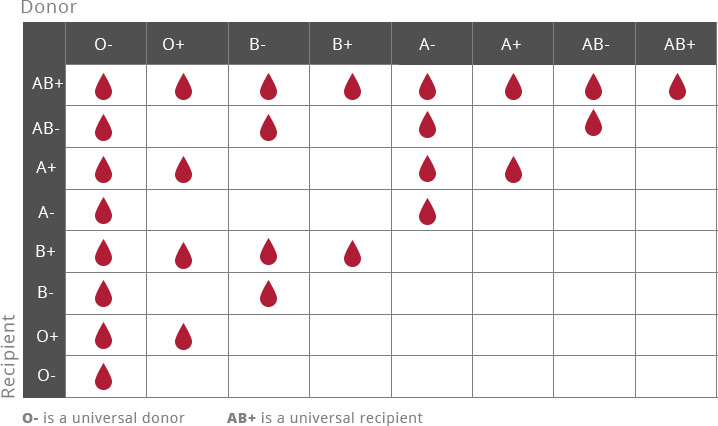
Group O donors are known as “universal donors” because their red blood cells can be given to patients of any blood group in emergencies. For this reason, Group O blood is often in high demand.
Why is this important?
Incorrect blood groups can trigger life‑threatening reactions. Group O blood is safe for all patients in emergencies, while AB recipients can receive any blood type.
Compatibility is always carefully checked before transfusion. You do not need to know your blood group to donate blood.
Which blood groups are compatible?