
All About Blood
Would you like to learn more about blood?
What is blood made up of?
Blood is made up of red blood cells, white blood cells, plasma and platelets – and each part has its own function:
Red Blood Cells
Red blood cells transport oxygen and carbon dioxide between the organs and lungs to keep our tissues alive. Red blood cells can do this because they carry an iron-containing molecule called haemoglobin.
White Blood Cells
White blood cells are important cells in our immune system that equip our body to fight infection. White blood cells are not helpful when transfused to other people, so these can be removed through a filtering process when blood products are made.
Plasma
Plasma is the liquid component of blood accounts for about half of each unit of whole blood. Plasma contains important proteins that help our blood to clot, carry antibodies and maintain our blood volume.
Platelets
Platelets are little cells that form plugs at the site of bleeding in vessels to help people stop bleeding.
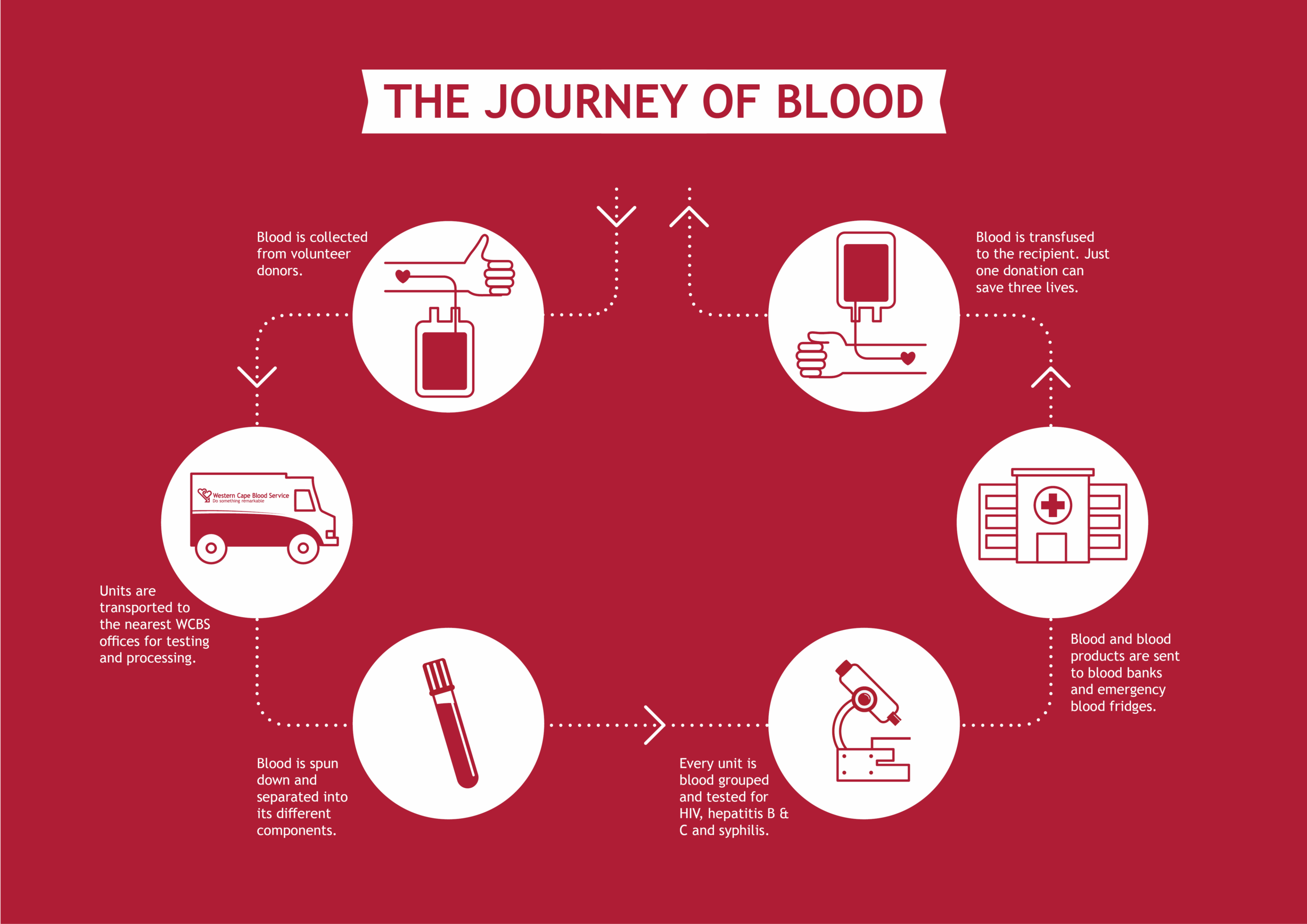
The unit of blood you donate is divided into various products, which means that patients receive only the part of your blood that they need and your one donation can help several different people. In other words, one whole blood donation can potentially save up to three lives. Impressive, isn’t it?
What happens after I donate a unit of blood?
Blood groups
There are four different ‘ABO’ blood groups: A, B, AB and O. Your blood group is determined by the presence of small proteins on your red cells (called antigens):
- If you are Group A, you have A proteins on your red cells
- If you are Group B, you have B proteins on your red cells
- If you are Group AB, you have A and B proteins on your red cells
- If you are Group O, you have neither A nor B proteins on your red cells
The words ‘positive’ or ‘negative’ that follow your ABO blood group refer to the presence of a different protein on your red cell called RhD:
- You are ‘positive’ if you have RhD proteins on your red cells or ‘negative’ if you don’t.
Group O is the most common blood group, followed by A, B and AB. The blood collection services welcome blood donors from all blood groups to donate blood, plasma and platelets.
Why is blood grouping important?
Knowing the blood groups of patients and donors is vital, so that patients receive the correct type of red blood cell products. There are antibodies in patients’ blood that can attack the A or B red cell proteins if someone is given blood that is not the correct group (e.g. a group A patient is given red cells from a group B donor, or a group B donors is given red blood cells from a group A donor), which can be life-threatening.
It is not necessary for you to know your blood group, because in the event that you ever require a blood transfusion, we will check this ourselves and make sure you receive compatible blood. If it is not possible to determine a patient’s blood group or there is not enough time, patients will receive emergency blood, which is group O.
Who are the universal donors and recipients?
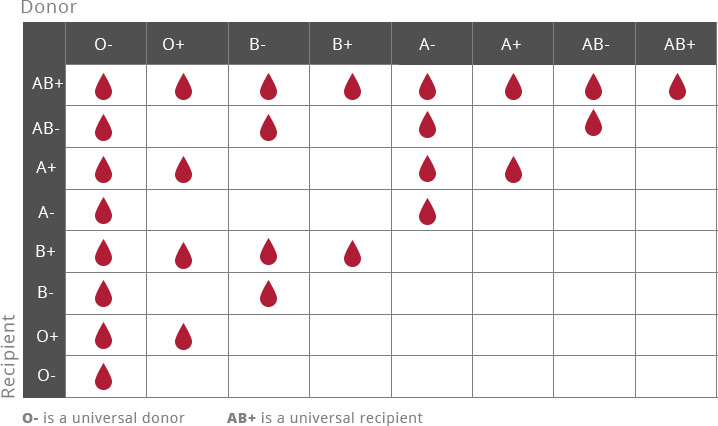
Group O people are known as ‘universal donors’ because their blood can be given to any patient, regardless of their blood group. The reason for this is that the Group O red cells don’t have A or B proteins on their surface, so blood group antibodies cannot harm them. Type O blood is very useful in emergency situations when there is not time to confirm the blood group of the patient before transfusion. There is always a high demand for Group O blood donors as their blood can be used for all patients.
Group AB people, on the other hand, are known as ‘universal recipients’. This means that they can receive any type of blood because they lack the antibodies that can react with the A and B proteins on the red cells. The plasma from Group AB donors is very useful as it does not contain A or B antibodies, so is very safe for use in babies.
Which blood groups are compatible?